
A Day in the Life of an Oxygen Project Session
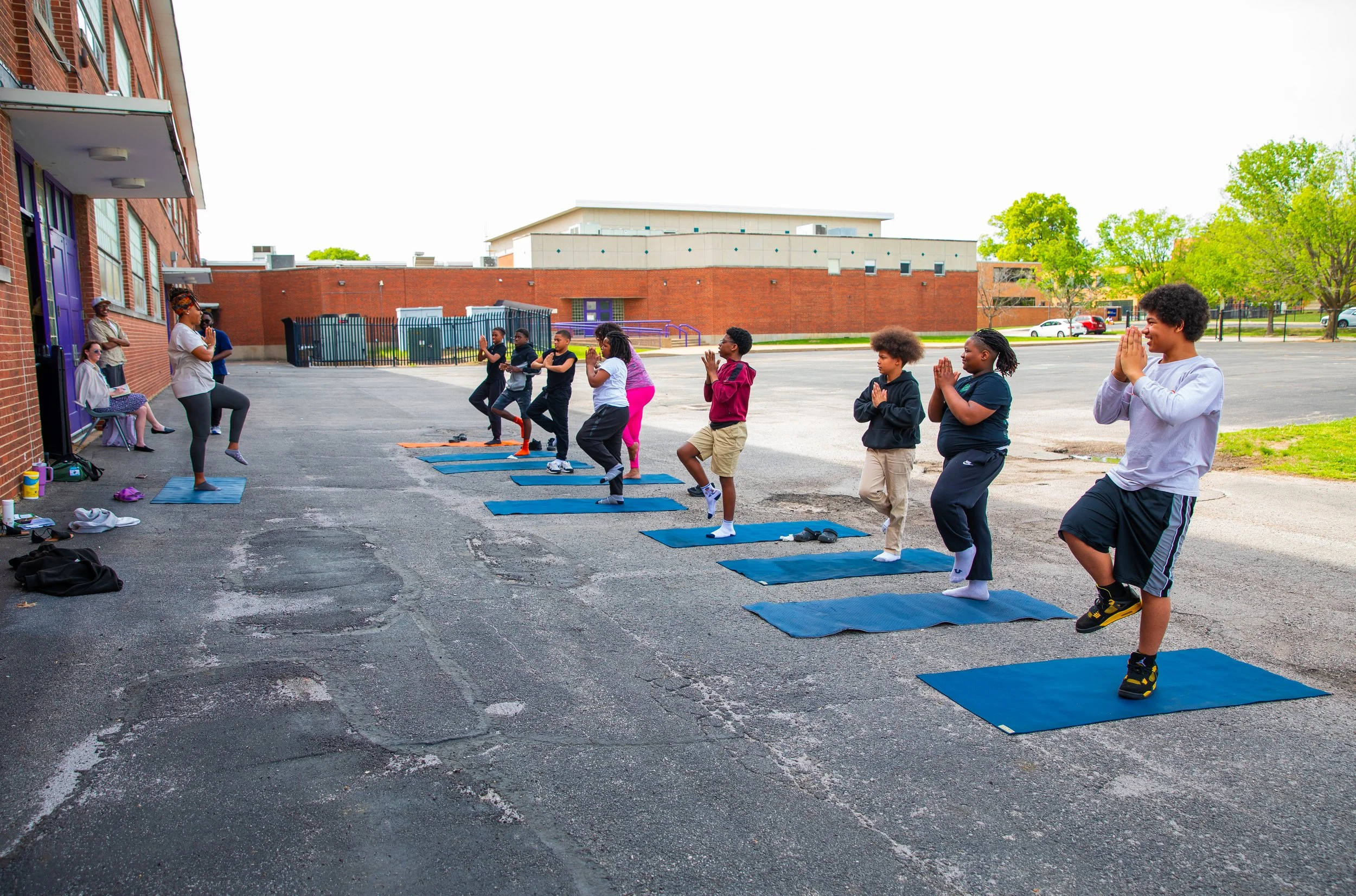
A group of eight students and five teachers on blacktop outdoors doing yoga on multi-colored yoga mats.
An Oxygen Project session begins with intention. Before students even step onto a mat, the space is prepared to feel calm, structured, and welcoming. Mats are arranged with care. The instructor greets students by name. Expectations are clear but supportive. From the moment students enter, they experience something different; a pause from the pace and pressures of the school day. This transition matters. It signals that this is a space where they can slow down, reset, and feel safe.
The session opens with grounding. Students are guided through simple breathing practices or body awareness check-ins designed to help regulate the nervous system. They are invited to notice how they are feeling, both physically and emotionally, without judgment. Participation is encouraged, but choice is always honored. These early minutes create psychological safety and set the tone for the rest of the session.
As movement begins, students engage in age-appropriate, mindful sequences that build strength, balance, coordination, and focus. Instructors integrate language that reinforces resilience, self-awareness, and perseverance. Students practice listening to their bodies, managing frustration, and sustaining attention. For some, this may be the first structured opportunity they’ve had all day to move with purpose and intention rather than react to external demands.
Throughout the session, regulation remains central. If energy is high, the practice may incorporate dynamic movement to channel it productively. If students arrive dysregulated or withdrawn, instructors adjust with slower pacing or additional grounding. Flexibility within structure is key. Every session is responsive to the needs of the group while maintaining consistency that builds trust.
As the session winds down, movement transitions into stillness. Students experience restorative poses, guided breathing, or brief visualization. This closing phase helps shift the body from activation to calm. It is often the moment when students feel the most noticeable change; heart rates slow, shoulders soften, and the room becomes quiet. The session concludes with a collective breath or short reflection, reinforcing that the tools they practiced can travel with them back into the classroom and beyond.
A Day in the Life of an Oxygen Project session is more than a wellness activity. It is structured skill-building in real time. Students practice regulation, self-awareness, and resilience in a supportive environment. From arrival to closing breath, they are not just moving, they are learning how to navigate stress, manage emotions, and build internal resources that support their success inside and outside of school.
