
What Trauma-Informed Wellness Looks Like in Real Life
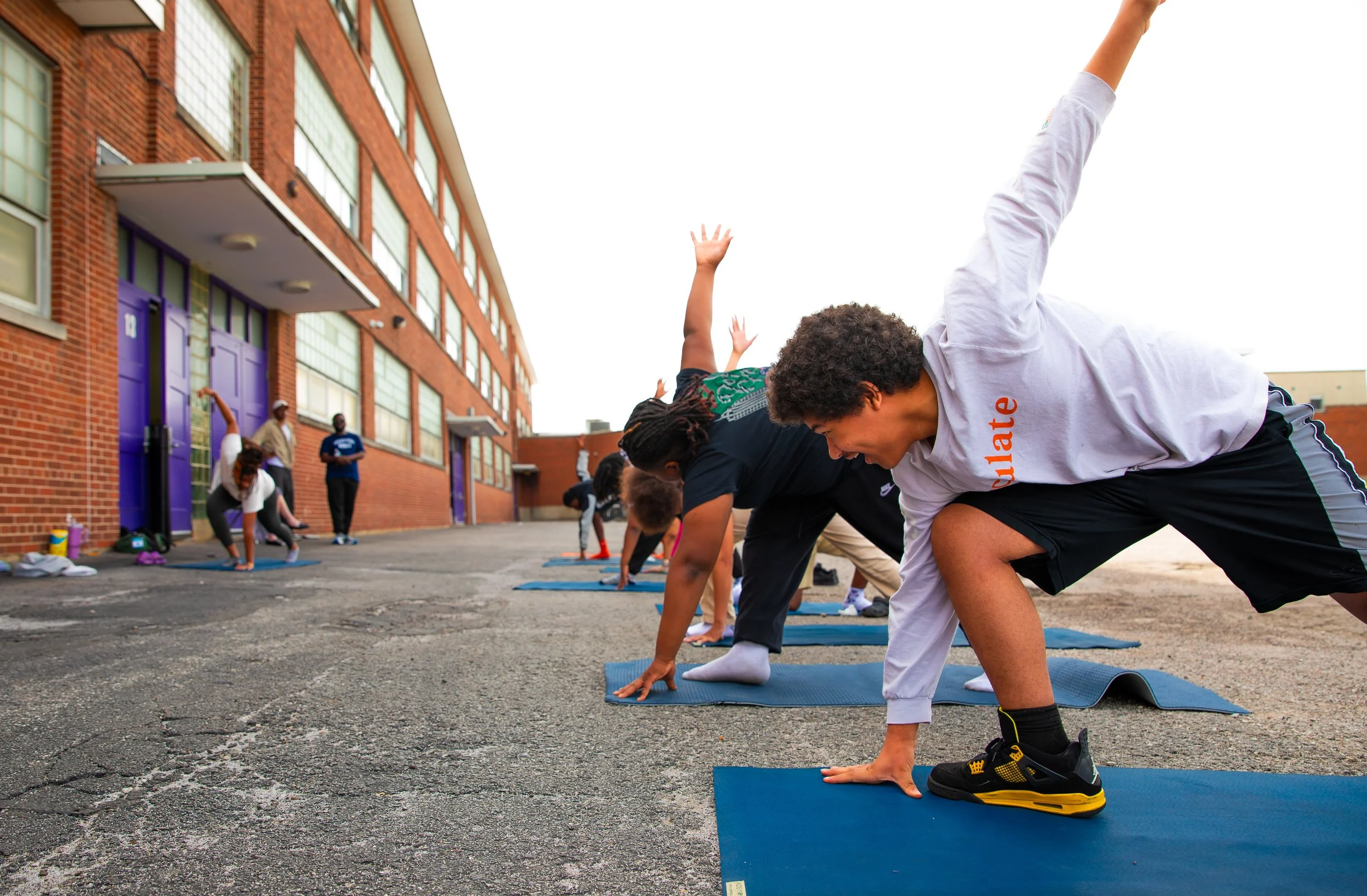
A group of students outdoors on multi-colored yoga mats in various yoga positions while smiling.
“Trauma-informed” has become a widely used phrase in education, youth development, and nonprofit spaces. But beyond the language, what does it actually look like in real classrooms, hallways, and after-school programs? Trauma-informed wellness is not a one-time training or a poster on the wall. It is a daily practice rooted in understanding how stress and adversity impact the brain, body, and behavior; and responding in ways that prioritize safety, regulation, and connection.
In schools and programs, trauma-informed wellness starts with predictability. Students thrive when routines are consistent, expectations are clear, and transitions are structured. Something as simple as beginning a session with a familiar breathing practice or closing with a reflection can create psychological safety. These small anchors help calm the nervous system, particularly for students who may be navigating instability or chronic stress outside of school.
It also shows up in how adults respond to behavior. Instead of asking, “What’s wrong with this student?” trauma-informed environments shift to, “What might this student be carrying?” When a young person is dysregulated such as raising their voice, shutting down, or withdrawing, the immediate goal is not punishment. It is regulation. That may look like offering a quiet reset space, guiding a grounding exercise, or giving the student a moment to breathe before engaging in conversation. Addressing the body’s stress response first creates space for accountability and problem-solving later.
Trauma-informed wellness is equally about empowerment. Students are taught skills they can use independently like: breathing techniques, mindful movement, emotional labeling, and self-awareness strategies. Over time, these tools build resilience. Students begin to recognize early signs of stress and respond before conflict escalates. They develop a sense of agency in managing their emotions, rather than feeling controlled by them.
Importantly, trauma-informed practice supports adults, too. Educators and program staff experience stress and secondary trauma. Sustainable wellness means creating systems that encourage adult regulation, collaboration, and reflection. When adults feel supported and regulated, they are better able to model calm, maintain consistency, and build trusting relationships with youth.
At The Oxygen Project, trauma-informed wellness is woven into every session and partnership. It looks like creating spaces where students can exhale. It looks like honoring lived experiences without defining students by them. And it looks like embedding regulation, relationship-building, and restorative practices into the rhythm of the school day. Beyond the buzzwords, trauma-informed wellness is about building environments where both young people and the adults who support them can thrive, together.
